For almost four decades, citizenship by investment schemes have been the ticket to a new nationality – at a hefty cost.
However, with some schemes coming in as high as almost $12.5 million, cheaper programmes across Europe and North America – and even the Caribbean and the Pacific – are increasing in popularity, according to analysts.
- UK: from $2.5m up to $12.47m. Free healthcare and education with low university fees and — for now — the right of free movement within the EU. A British passport gives visa-free access to 183 countries, although that figure may reduce after Brexit.
- Cyprus: $2.4m. The whole family benefits, with citizenship passed to future generations. The right of free movement within the EU and visa-free access to 172 countries.
- Canada: $905,000. Child support, free education (plus subsidised university) and free healthcare in most provinces. Expect permanent residency within six-to-nine months or, in Quebec, in one-to-four years. You can then apply for a Canadian passport after living three of five years in Canada, which offers visa-free access to 183 countries.
- US: from $900,000. You are free to live and work anywhere in the US and your children can access a US education. An American passport offers visa-free access to 183 countries.
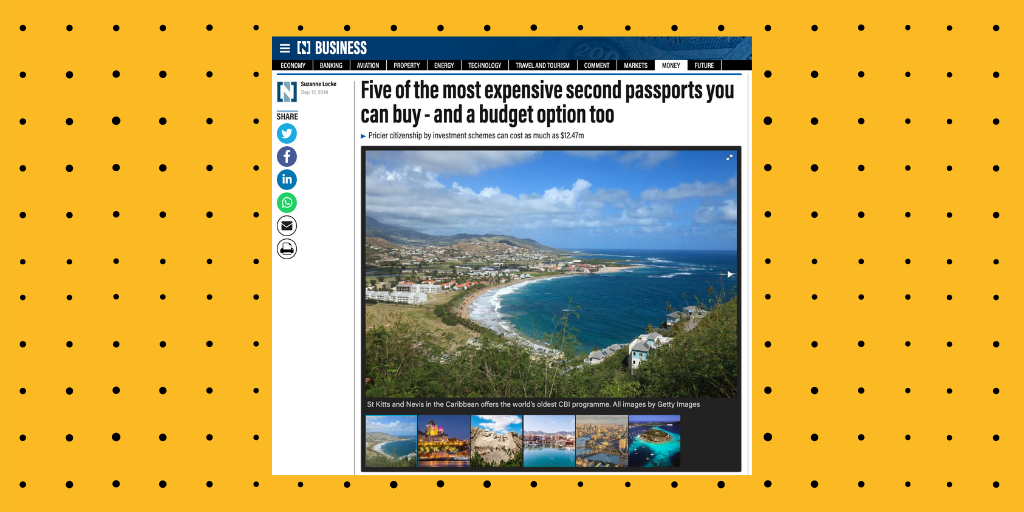
- St Kitts & Nevis: from $235,000. The country has instituted a 60-day accelerated application process. Income and capital gains are tax-free. Citizens are allowed to hold multiple nationalities and gain visa-free access to 152 countries.
A cheaper passport choice – Vanuatu: $130,000
Why on earth pick Vanuatu? Easy. The South Pacific country has no income tax, wealth tax, capital gains or inheritance tax. And in 2015, when it was hit by Cyclone Pam, it signed an agreement with the EU that gave it some serious passport power.
Read the full story at The National – originally published in September 2019.